The short answer
"Bitcoin Gold" means four completely different things, and most people searching for it want one of the last three. There's Bitcoin Gold (BTG), a 2017 fork of Bitcoin that is now delisted from nearly every major exchange. There are gold-plated novelty Bitcoin coins, which contain no meaningful gold. There are gold-backed crypto tokens like PAXG. And there is real bullion bought with Bitcoin — which is almost always what people actually meant.
Search "buy bitcoin gold" and you will find a strange mix of results: a cryptocurrency almost nobody trades, souvenir coins from Amazon, and dealers selling actual metal. That confusion is understandable. The name collides with three unrelated products, and the wrong one can cost you money.
Here is what each one actually is, with the facts, so you can work out which you were looking for.
What is Bitcoin Gold (BTG)?
Bitcoin Gold is a cryptocurrency, not a metal. It was created by a hard fork of the Bitcoin blockchain at block height 491,407 in late October 2017, with the new network producing its first blocks on 12 November 2017. Anyone holding BTC at the snapshot received an equal amount of BTG.
The stated aim was to break the dominance of specialist ASIC mining hardware by switching to Equihash, an algorithm that ordinary graphics cards could mine. The slogan was "make Bitcoin decentralised again." The effort was led by Jack Liao of Hong Kong GPU-rig maker LightningASIC, with Hang Yin, a former Google engineer, as lead developer. Its supply cap mirrors Bitcoin's at 21 million coins.
It holds no gold. It is not backed by gold. It has no relationship to any metal beyond the word in its name.
Why can't I buy Bitcoin Gold?
Because most major exchanges have removed it. As of August 2026, Coinbase's own price page states plainly that "Bitcoin Gold is not tradable on Coinbase," and Binance's page carries a "Not listed" badge. Those are usually the first two places a buyer looks.
The delistings stretch back years:
- Bittrex — delisted September 2018, after a dispute over who should cover losses from a network attack
- Bitfinex — ceased trading November 2023
- Upbit — delisted January 2025, citing transparency and disclosure concerns
- Gate.io and Bithumb — both removed it, citing failed listing-maintenance standards
Liquidity now appears close to zero on the venues that track it. When we checked in August 2026, price aggregators disagreed wildly — one showed roughly $0.23, three others clustered near $0.50, and a fourth displayed two contradictory prices on the same page, 60 times apart. That kind of disagreement is itself the answer: when trackers cannot agree what something is worth, there is not enough trading happening to establish a price.
A coin that four major data providers cannot price consistently is not a coin you can reliably sell.
What happened to Bitcoin Gold?
It was successfully attacked twice, which is what drove the delistings. The irony is sharp: a project built to make mining more decentralised ended up with so little mining power that attacking it became cheap.
May 2018. An attacker gained majority control of the network's hashpower and double-spent roughly 388,000 BTG, worth about $18 million at the time. The method was straightforward — deposit coins at exchanges, trade and withdraw, then mine a longer private chain that erased the original deposits. It was, at that point, the largest public blockchain to suffer a real double-spend attack rather than a theoretical one.
January 2020. It happened again, twice in two days. MIT Digital Currency Initiative researcher James Lovejoy documented both reorganisations in detail: on 23 January, 14 blocks were removed and 1,900 BTG double-spent; the following day, 15 blocks were removed and roughly 5,267 BTG double-spent. Combined losses were about $70,000. The estimated cost to the attacker was somewhere between $1,200 and $1,700 of rented hashpower per attack — less than the value extracted.
Development has largely stopped since. The last stable release, v0.17.3, dates from August 2020.
Are gold-plated Bitcoin coins real gold?
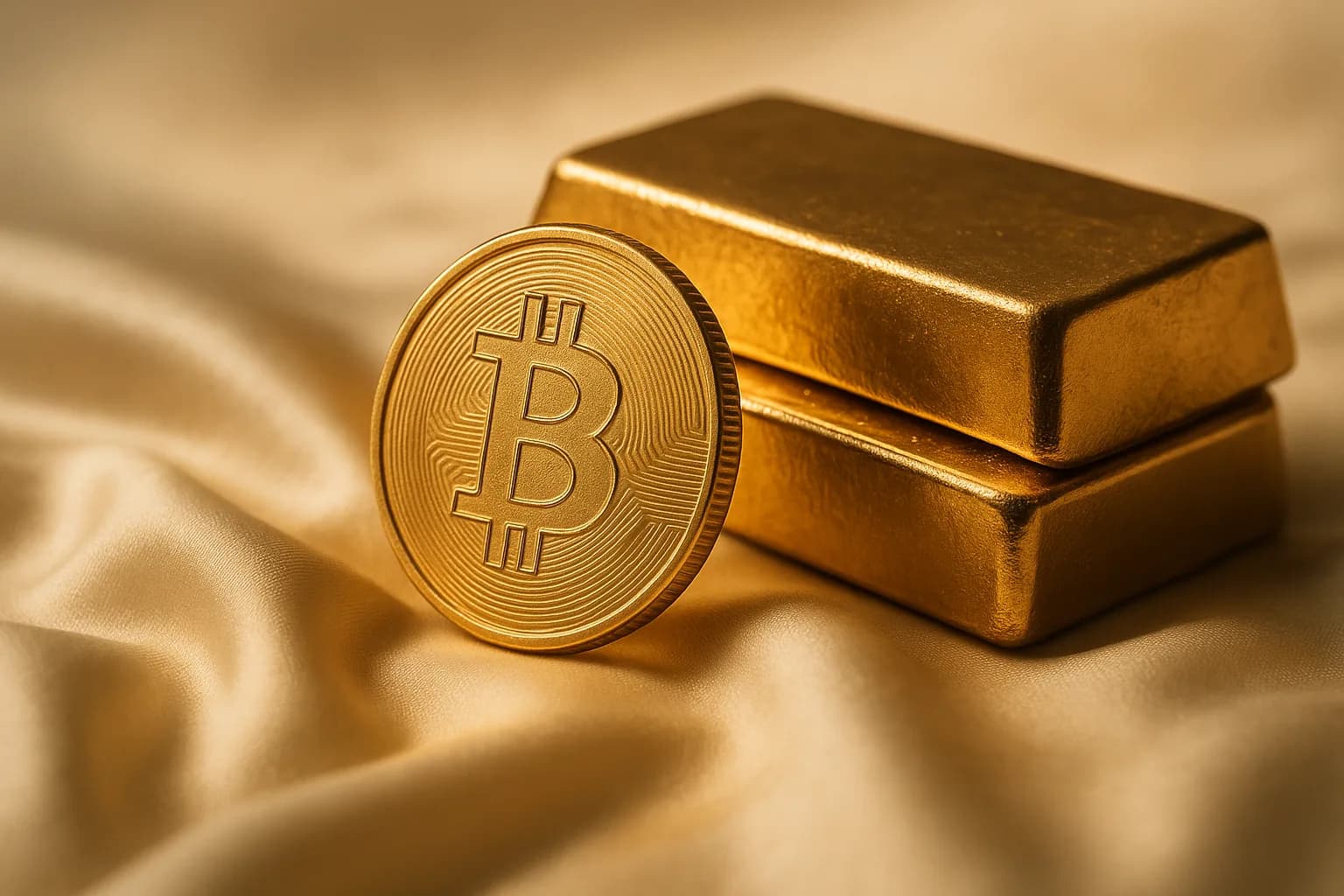
No. The physical "Bitcoin coins" sold on marketplaces for a few dollars are novelty items. The base metal is typically iron or zinc alloy with a microscopically thin decorative plating. When a listing says "24K gold plated," the 24-karat description applies only to the plating layer, not to the coin.
Melt them down and you would recover a fraction of a penny in gold. They are desk ornaments and gifts. Nothing wrong with that — just don't confuse them with an investment.
What about Casascius coins?
These are genuinely significant, and completely different. Between 2011 and 2013, Mike Caldwell minted physical coins and bars with a real Bitcoin private key embedded underneath a tamper-evident hologram. The public address is printed on the face, so anyone can verify the balance on-chain. Denominations ran from 0.5 BTC to 1,000 BTC in brass, fine silver, and gold-plated finishes.
Production stopped in November 2013 after FinCEN advised Caldwell that minting loaded coins made him a money transmitter. Because peeling the hologram destroys the collectible value, few remain unredeemed — and those trade at large premiums as artefacts of crypto history. One Casascius piece realised $1.69 million at a GreatCollections auction in November 2021.
They are collectibles whose value comes from the Bitcoin inside plus rarity — not from their metal content.
What about gold-backed tokens like PAXG?
These are the closest thing to "a cryptocurrency that is actually gold." Each token represents a claim on real vaulted metal:
- PAX Gold (PAXG) — issued by Paxos Trust Company, regulated by the New York Department of Financial Services. One token equals one fine troy ounce of London Good Delivery gold held in LBMA vaults, redeemable for physical bars at a minimum of 430 PAXG.
- Tether Gold (XAUT) — issued by TG Commodities, one token per troy ounce stored in Switzerland.
They solve a real problem: exposure to the gold price with the settlement speed of a blockchain. But they are not the same as owning metal. You hold a claim against an issuer, dependent on that issuer's solvency, custody arrangements, and continued operation. The redemption minimum on PAXG — roughly a 400 oz bar — puts physical delivery out of reach for most retail holders.
If counterparty risk is the thing you were trying to escape by buying gold, a token reintroduces it.
Bitcoin Gold vs real gold: a direct comparison
| Bitcoin Gold (BTG) | Novelty "Bitcoin coin" | Gold token (PAXG) | Physical bullion | |
|---|---|---|---|---|
| Contains gold? | None | Trace plating only | Claim on vaulted gold | Yes — you hold it |
| Counterparty risk | Network risk | None (no value) | Issuer + custodian | None once delivered |
| Liquidity in 2026 | Near zero | Not applicable | Good | Global, established |
| Can you hold it? | No | Yes, but worthless | Only above ~430 oz | Yes, any size |
| Track record | Two 51% attacks | Souvenir | Since 2019 | Roughly 5,000 years |
How do you buy real gold with Bitcoin?
You pay a bullion dealer directly from your wallet and take delivery of the metal. No fork, no token, no intermediary holding your asset. The flow is short:
- Choose your coins or bars. A 1 oz American Gold Eagle or Krugerrand is the classic starting point for recognisability; a 1 oz Valcambi bar gives you more metal per pound spent.
- Select Bitcoin at checkout. The order generates a payment address and locks your price in USD for 20 minutes, so a mid-transaction price swing doesn't change what you owe.
- Send from your own wallet. Nothing is custodied on your behalf.
- The metal ships insured and discreetly packaged.
We also accept Ethereum, Litecoin, Monero, Solana, and network-separated stablecoins — the full list is on the how to buy with crypto guide, and buying gold with Bitcoin covers the payment flow in detail.
Browse the gold range or silver range to see live prices, or read our walkthrough on buying gold with Bitcoin without the friction.
Frequently asked questions
Is Bitcoin Gold the same as Bitcoin?
No. Bitcoin Gold is a separate cryptocurrency created by forking Bitcoin's blockchain in 2017. They share transaction history up to the fork point and nothing after it. Holding BTG gives you no claim on BTC.
Is Bitcoin Gold backed by gold?
No. Despite the name, Bitcoin Gold holds no metal reserves and has no connection to the gold market. The "gold" refers to the project's branding, not its backing.
Where can I buy Bitcoin Gold in 2026?
Not on Coinbase or Binance, both of which confirm it is unavailable. Some smaller and regional exchanges may still list it, but reported trading volumes are at or near zero, meaning even a listed pair may not fill an order at a sensible price.
Is Bitcoin Gold dead?
The network still produces blocks, so it is not technically dead. But with no stable software release since August 2020, minimal hashrate, and delisting from most major exchanges, it is best described as dormant.
What should I buy if I want gold and I hold crypto?
If you want exposure to the gold price with easy trading, a regulated token like PAXG does that. If you want an asset with no counterparty — the reason most people buy gold in the first place — buy physical coins or bars and take delivery. You can pay with Bitcoin either way.
Can I sell gold back for Bitcoin?
Yes. We run a buyback programme priced against live spot, and can settle in Bitcoin if you prefer.
Sources
Fork height and launch date: Bitcoin Magazine and the project's launch announcement. 2018 attack figures: Fortune and Bleeping Computer contemporaneous reporting. 2020 reorganisation data: James Lovejoy, MIT Digital Currency Initiative. Delisting dates: exchange announcements from Bittrex, Bitfinex, Upbit and Gate.io. Current listing status: Coinbase and Binance price pages, checked August 2026. Casascius auction result: GreatCollections, November 2021. PAXG redemption terms: Paxos. Prices and market data move constantly — verify anything time-sensitive before acting on it.